
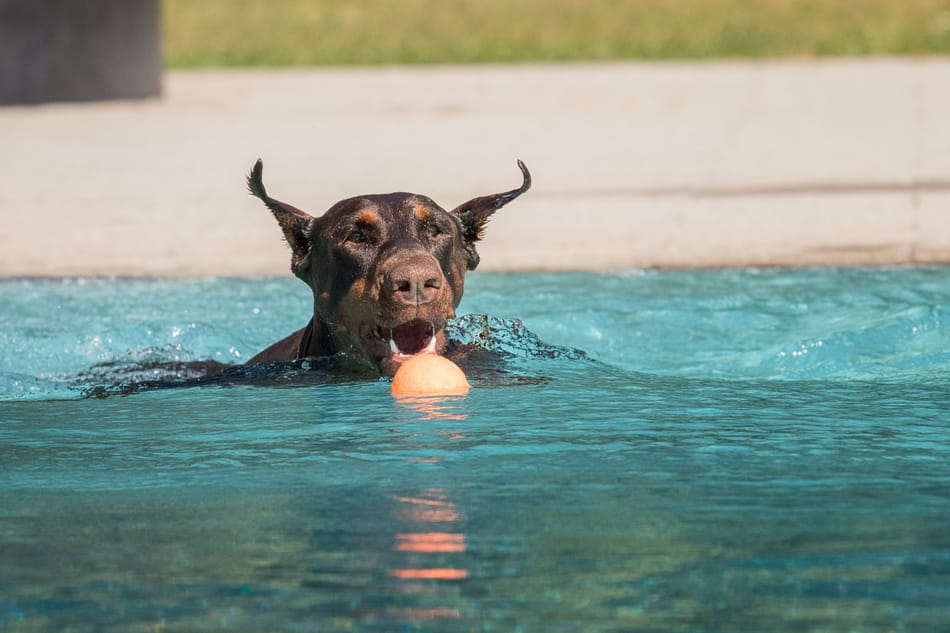
I love my Doberman, but I also happen to love spending time in my pool and going out to the lake. Growing up in a family that enjoys lots of water sports made owning a dog who likes to swim a priority. So the question is, do Dobermans like to swim? Luckily I have a lot of experience in that department, so here’s the breakdown.
Do Dobermans like to swim? Most Dobermans like swimming, but it’s not natural to them. They are fun-loving dogs who enjoy getting in the water but their lean, muscular build is not ideal for swimming and can cause them to have difficulties staying afloat.
Although swimming may not be natural for a Doberman, they can have a lot of fun at it and be trained to swim quite well. However, there are a few critical missteps some owners make when introducing their Dobie to water for the first time. So here’s what you need to know about their swimming abilities, limitations, and how to introduce them to the water for the first time.
Dobermans Like to Swim
Dobermans love to get in the water and splash around. They are fun-loving dogs who can also get overheated at times so they naturally seem to take to swimming. However, they aren’t the best at it. They have deep chests, low body fat, and lots of muscle. This means they tend to sink more than they float.
Luckily they are very athletic dogs and make up for a lot of that with their sheer power and endurance. Below are some of the water activities that Dobermans love.
- Swimming in a Pool – Swimming in a pool isn’t entirely natural for the Doberman. They like to swim but the steep walls and stairs to get in and out of most pools can be a little frightening for them. They do much better with gentle slopes into the water. After some confidence-building though, they can learn to love to swim in a normal swimming pool.
- Splashing on the Beach (but not swimming) – A beach is a great place for your Doberman to learn to play in the water. Splashing in the tides is great, but most Dobermans won’t swim in the ocean due to fear of the waves. It’s probably for the best though since waves, tides, and currents can be very dangerous for them.
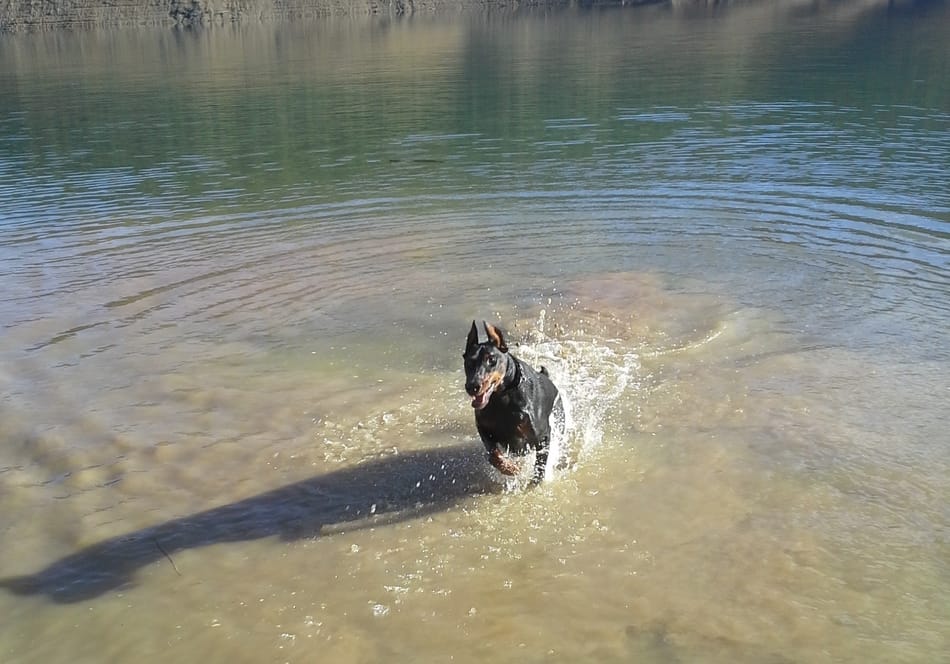
- Swimming in a River or Lake – This is usually a much better option. In fact, this may be the first place you can successfully get your Doberman to swim. The gentle slopes along a lake and the still water will help your Dobie slowly build confidence playing in the water. Toss a stick in further and further out into the water while they fetch it. If you’re swimming in a river, be careful of the current.
- Playing in a Child’s Splash Pool – Dobermans will take to a child’s splash pool very quickly, especially on hot days. It isn’t too deep and it allows them to build confidence with water.
So they naturally love just about all types and variations of swimming, but why are they so bad at it?
Why They Aren’t Great Swimmers
So we know that Dobermans enjoy swimming quite a bit thanks to their fun-loving nature and natural curiosity. But why then are they so bad at it? Quite simply, it’s because they just aren’t naturally built for it.
- Deep Chests – Many deep-chested, dogs struggle in water because their front ends get elevated due to their large lung capacity. This is certainly true of the Doberman. This means that their rear end will sink somewhat.
- Muscular Bodies – Muscle sinks and fat floats. Dobermans have lots of muscle but are a lean dog with not much body fat. That means they tend to sink more than they float.
- Long Bodies – Dobermans have long bodies with a broad front end and narrower rear end. This causes their rear ends to sink down even more.
- Paws – Unfortunately, a Doberman does not have webbed feet, they have feet similar to a cat. They have arched toes, so the feet have maximum support and the toes can grip a variety of surfaces. Dogs with webbed feet, like Labrador Retrievers and Newfoundland, work well in water. Dogs with cat-like feet, like the Doberman, struggle in water.
Bottom line—a Dobie is a good, but not a great, swimmer. They have the drive, desire, and physical abilities to swim, but not the build for it.
TIP: To learn all about the basics of the Doberman breed, including their physical attributes, see my Complete Breed Overview of the Doberman.
Teaching Your Doberman to Swim
Most animal trainers recommend a gradual approach to introducing your dog to water. This is certainly important with Dobermans because if you move too fast, they could develop a fear of water early on, and you’ll have extreme difficulty getting your dog to enjoy swimming in the future.
For this same reason, never force your dog into the water when they don’t want to and also be careful not to let them accidentally fall in.
Step 1: If You’ll Be Using a Life Jacket, Have Him Wear It on Land First
Turn their life jacket into their “dinner jacket”. In other words, when it’s dinner time, make your Doberman sit and stay while you buckle the life jacket on him. Then give them a release command and allow him to eat his dinner while wearing it. This will help associate the life jacket with positive things.
After he’s done eating let him continue to wear it for a short time. If he looks uncomfortable in it or is struggling to get out of it, take it off. You want wearing the life jacket to stay a positive experience.
Step 2: Pick an Ideal Place
Find a place to go swimming for the first time. Somewhere shallow with gentle slopes into the water, no current or waves, and somewhere generally calm. These things will help to make sure your Doberman feels confident while learning to swim.
Step 3: Start Gradually
Walk with your dog on a leash to where the water begins and it is only an inch or two deep. Don’t force him in, but instead just walk along the water calmly and see if you can get him to put his paws in the water while he walks. This shouldn’t be too difficult since Dobies are naturally curious.
Step 4: Get Wet Yourself
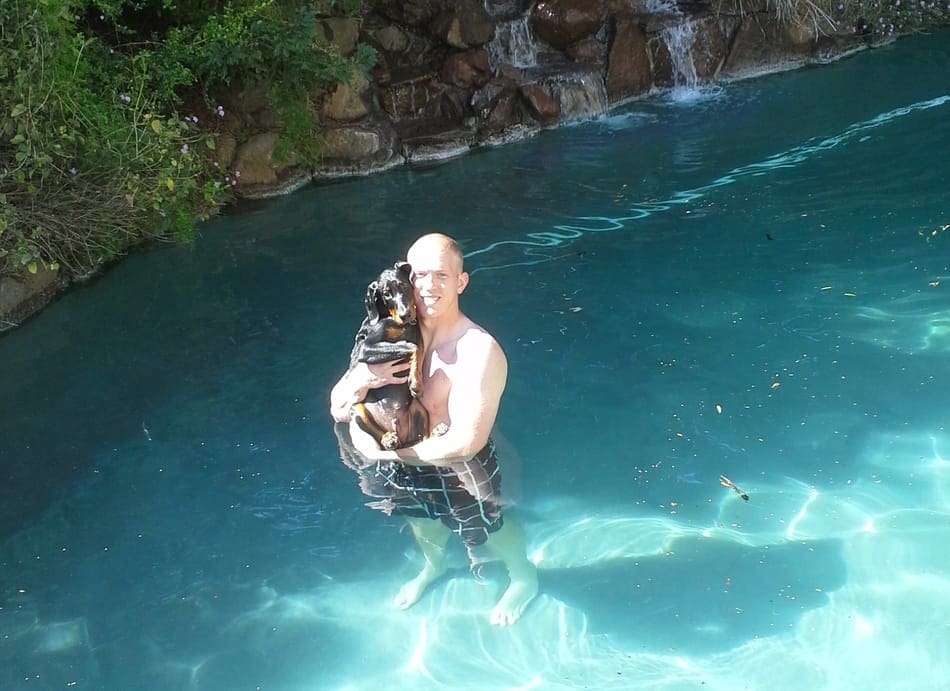
Dobermans are very in-tuned with their masters and it’s easy to use this to your advantage (or disadvantage). If he sees you getting in the water and having fun he’ll feel no fear and will want to try it himself. If you’re afraid to touch the water while trying to get him to do it, you probably won’t make much progress.
Step 5: Get Him Excited to Go In
After you’ve got him used to the water a little, and he’s seen you playing in the water, it’s time to get him excited to go in himself. Try playing fetch and throwing his toy slowly further and further out while verbally encouraging him. See if you can get him in progressively deeper water until he needs to swim to retrieve his toy. When he brings his toy back to you on dry land, praise and give him a treat.
A resource you might find helpful is Talented Animals Blog – Helping Your Dog Learn to Love to Swim. There you’ll find more specific, and detailed suggestions that work along these same principals.
Swimming is Good for Your Doberman
If you’re struggling with getting him to swim, wondering if it’s worth your time, you may want to know about all the benefits your dog will get from swimming.
- Exercise – Swimming provides aerobic and strength exercises. It allows them to burn off some of their excess energy and forces them to use muscles they don’t normally use. This is so important for Dobies as they generally have very high exercise requirements. See my article all about exercising and building muscle in your Doberman for more help with this.
- Stimulation – We all know that dogs need lots of it—especially Dobies. Taking them to a lake or the beach gives them the excitement of a new setting and will help further engage their mind.
- Bonding – Dobermans are people dogs, we all already know this, so they absolutely love bonding with their owners. It will keep them happy and calmer throughout the day if they have lots of bonding time with you and water play is a perfect way to do that.
- Cooling Down – Dobermans are horrible in the cold, but they aren’t great in the heat either. Swimming can help your dog maintain a healthy body temperature and prevent overheating in the summer. Just remember that what you find comfortable might be a little too cold for your Dobie.
Many veterinarians recommend water therapy for larger dogs like Dobermans. Especially considering the Doberman’s potential for bone and joint problems.
“From a preventative perspective, hydrotherapy is good for fitness, body condition, and a great source of aerobic exercise that is low impact on the bones and joints. It is a great tool to help your dog stay in optimal shape.”
Dr. Jonathan Block, DVM. Water4Dogs Canine Rehabilitation Center, New York (source)
Keeping Your Dog Safe While Swimming
The most important thing you can do is to closely supervise your Dobie while he’s swimming. Keep a close eye on him and be in a position to help if need be so that there’s no hesitation. At the beach, be aware of undertow and strong waves.
When in doubt, get your Dobie used to a life jacket, and use it. This is especially important when the current is strong, the waves are rough, or the water is deep. A life jacket will keep your dog afloat until you can use the grab handles to pull him out of water or at least help him stay afloat. Pulling 80 pounds of soaking wet dog might not be in your skillset—so have a life jacket with a good handle.
If you want to take your Dobie out on a boat, a life jacket should be a necessity, not an option.
Water-Related Health Risks
Besides safety concerns, be on the lookout for a few possible health dangers. The most common ones being swimmer’s ear (or more rarely ear infections) and the deadly blue-green algae, if swimming in a natural setting like a lake.
Blue-green Algae
This is a very dangerous type of algae that can bloom in some lakes and cause death very quickly in a dog that ingests it (i.e. in a matter of hours). Really if you see an algae bloom of any kind where you are, it’s best to avoid getting in the water with your dog.
Blue-green algae often has a foul smell and is often described as looking similar to spilled green paint or pea soup. There will often be a sheen on the water’s surface. The Minnesota Pollution Control Agency has good info about this type of algae available here. Keep in mind that this deadly algae certainly affects many areas of the world, it’s not specific to just Minnesota.
Swimmer’s Ear
If your dog’s ear is irritated and extra water is present, you have a recipe for swimmer’s ear—a bacterial infection. It’s far easier to prevent this than treat it later. So just dry your Dobie’s ears after playing in the water and clean them regularly during swimming season with an ear cleanser. Regular ear cleanser will do.
If you notice a discharge, strange odor, excessive scratching, or redness in his ear, you could well have a case of swimmer’s ear. If you’re unsure of this, check with your vet.
If your dog is coughing, that could be a warning sign that something is wrong. Get him out of the water immediately. Also, if your dog has an infection, such as urinary or skin, water activities could aggravate it.
One bit of good news if swimming in your backyard swimming pool—chlorine is not a major concern as long as it’s being used at safe levels.
Final Thoughts
Dobermans are fun-loving dogs who love to swim, although they’re certainly not the best swimmers in the world. If you want your Doberman to swim, you’ll need to provide some steady encouragement and build up to it slowly.
Swimming with your Dobie will provide him with stimulation, exercise, and variety. Just remember that it should always be a fun and positive experience for you and your dog. If it becomes apparent it won’t be, then it’s time to stop and shift gears. Happy swimming!
Related Questions
Do Dobermans have webbed feet? Although some dogs have webbed feet, Doberman Pinschers do not. Dobermans have arched toes on their feet with no webbing in between. This helps them to grip a variety of surfaces but is bad for treading water.